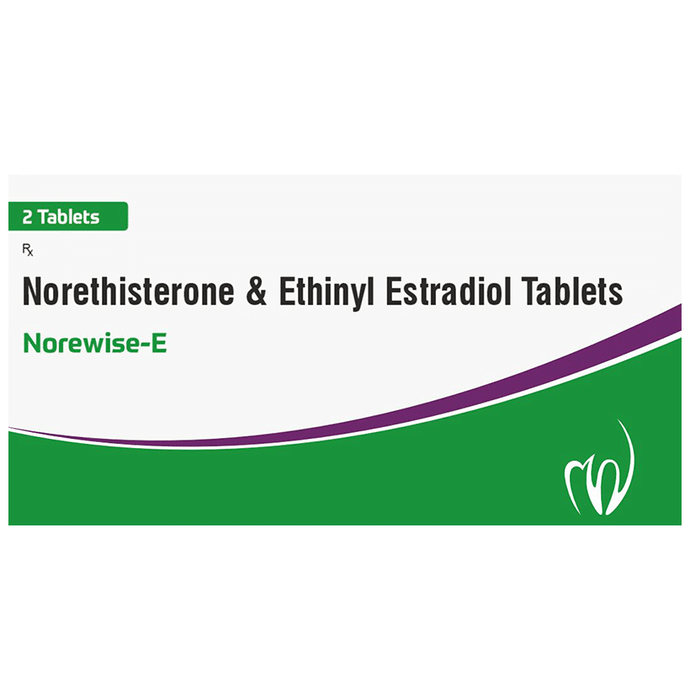
Norewise-E Tablet
In Contraception Norewise-E Tablet is a combination of two hormones taken to prevent pregnancy. Unlike barrier methods, it does not interrupt intimacy, providing continuous protection without needing to act each time. Additionally, it offers other health benef…


About this Medicine
Norewise-E Tablet is a contraceptive medicine taken to prevent pregnancy. It works by preventing the release of an egg from the ovaries (ovulation). Additionally, it thickens the cervical mucus, making it harder for sperm to reach an egg. This way, it provides effective birth control when taken as directed. For Norewise-E Tablet to be most effective, it must be taken at the same time every day. Missing doses or taking the pill irregularly can reduce its effectiveness and increase the chance of pregnancy. If a dose is missed, follow the instructions on the packaging or consult your doctor for guidance. To maximize its benefits, consider setting a daily reminder or alarm to help you remember to take it on time.Some common side effects of Norewise-E Tablet include nausea, vomiting, headaches, breast tenderness, and irregular menstrual flow. These symptoms are generally mild and decrease as your body adjusts to the medication. To manage nausea, try taking the pill with food or before bed. If the side effects persist or worsen, consult your doctor. They may be able to help by adjusting your treatment plan.While taking Norewise-E Tablet, avoid smoking, as it can increase the risk of cardiovascular side effects. Inform your doctor if you have a history of blood clots, high blood pressure, liver disease, or certain types of cancer. Avoid using other hormonal contraceptives alongside Norewise-E Tablet, as this may lead to hormone overload and adverse effects.
How it Works
Norewise-E Tablet contains estradiol and norethisterone. Together, they help stop the process of ovulation (the release of an egg from the ovaries) and change the lining of the uterus (endometrium), making it thinner. Additionally, norethisterone also prevents fertilization by making the vaginal fluid (mucus) thicker, thus making it harder for sperm to reach an egg.
Key Facts
Habit Forming :: No|Therapeutic Class :: GYNAECOLOGICAL
Safety Overview


Not sure if this medicine is right for you?
Consult a certified doctor for personalised medical advice.